
How Minnesota Recent Arrests Reach the Public
Minnesota spreads across 87 counties. No single statewide roster lists every booking by name. So the hunt starts locally. The county jail or sheriff is usually the right first stop whenever someone was booked and held there. Some agencies run a live custody roster. Others settle for a weekday report, a rolling PDF, a short media brief, or nothing with names at all. A person can slip out of view quickly, too. Someone released before a refresh, moved to another facility, or held on a quiet matter may never appear in a public search at all.
Timing matters more than people expect. Four clocks shape a page: the arrest, the booking, the county's data transfer, and the site refresh. A "today" label often tracks the county's workday or report cycle, not a true rolling 24-hour span. A custody page drops names after release. An older report may linger until the PDF gets replaced. The Arrests Last 24 Hours guide compares these patterns across counties and shows how to check a recent event without assuming every clock runs the same.
Fields differ as much as schedules. One roster gives a booking date and facility number. Another adds age, city, charge text, or a photo link. Plenty of pages mix arrests with warrants, civil holds, and other jail activity, so a row is not always a booking. A sheriff's call or incident entry does not prove an arrest. Check the title, date range, and field labels on the government page before treating any row as a booking record.
| Source pattern | What it can answer | Limit to keep in view |
|---|---|---|
| Live jail roster | Who is shown in custody at the time of the search | May omit people released, not yet booked, or held elsewhere |
| Daily or rotating report | Which bookings fall inside the report's stated period | May update on weekdays, omit photos, or overwrite an older copy |
| Incident or activity log | What events an agency chose to summarize | A call, stop, or incident is not always an arrest |
| Records request | A specific record held by the responsible agency | Release can be delayed, redacted, or limited by law |
These are source types, not a quality ranking. Washington County rotates a report that covers 7 a.m. to 7 a.m. Wright County's weekday Jail Media Report lists recently booked adults and includes a photo field. Carver's current roster refreshes about every two hours. Ramsey's custody page updates more often but remains a custody snapshot. Each label answers a different question. A name absent from one view may simply not have reached it yet.
Note: A roster refresh time shows when the page changed, not the precise hour an arrest or booking occurred.
Find Booking Data by County and Place
Start with the booking place, not the arresting agency. Any agency can fill a county jail. A city-police arrest, a State Patrol stop, and a sheriff's arrest can all land in the same county detention facility. Some bookings involve one agency. Others come from a different one entirely. The booking county may therefore not match the arresting agency's name. Check the county where the event occurred first. Then look at nearby counties that hold people under local agreements. If the person is out of custody now, a live roster may no longer help.
- Write down the arrest date, city or highway, and agency name from a reliable source.
- Use the Minnesota County Directory to open the county connected to the event or booking.
- Read the roster’s update time, date filters, and status terms before matching a result.
- If no result appears, check the adjacent county or use a narrow request to the jail or arresting agency.
- Use the court portal for case action and the official custody service for a current hold.
The county directory routes to county-specific arrest sites. Each local page names the source that sheriff or jail actually uses. County seats appear as a geographic cue. Seats are not booking cities by default. Large counties can run several facilities. A person may sit in a regional jail or another county entirely. The agency that owns the record can say which office holds the booking sheet, incident report, or image. The Olmsted County Sheriff's Office Media Briefs page offers one official example of a selective event summary rather than a complete roster.
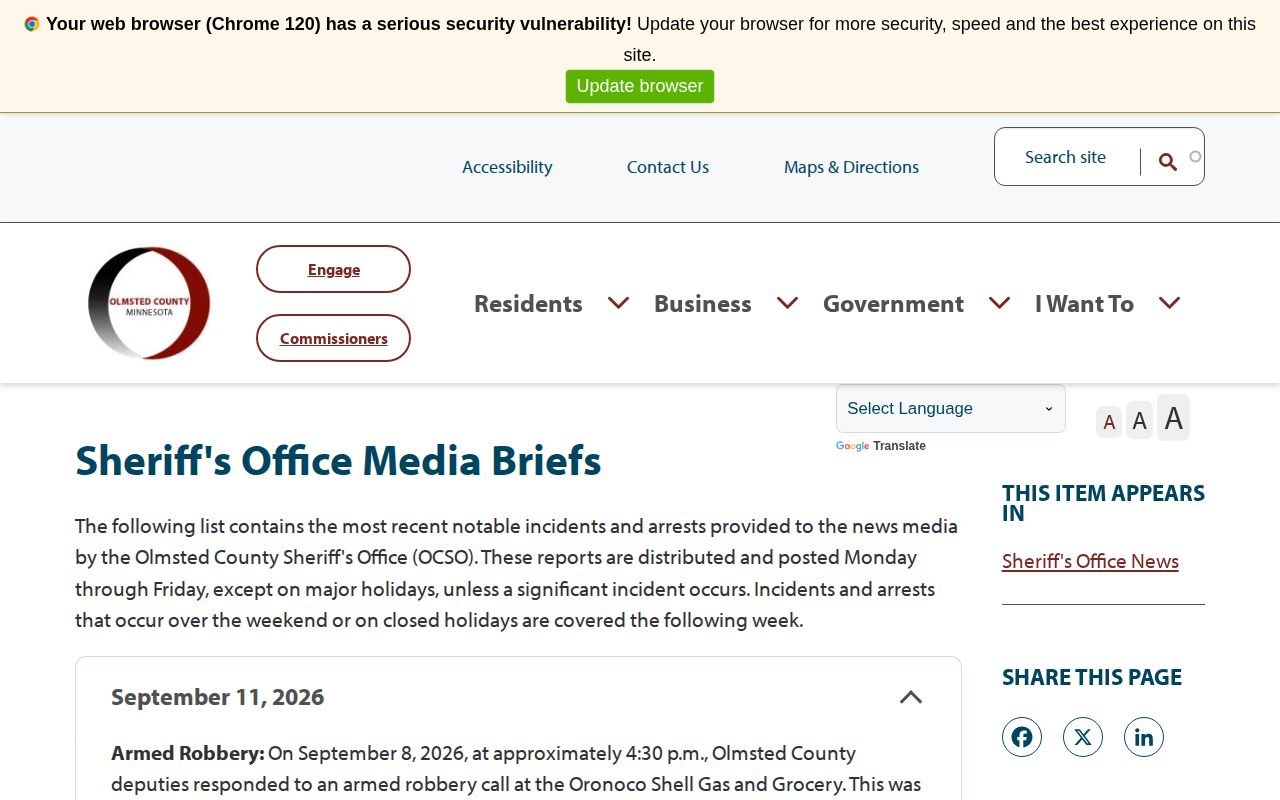
Those briefs highlight selected incidents on a weekday cycle. They are not a list of every booking in the county.
Where New Arrests Appear
Official county sources come first in any search. A jail roster answers current custody. A dated booking report covers its own stated window. The sheriff's records office handles agency-held reports. Courts can show later case action, but they are not the intake system. State Patrol material is narrower than people assume. It covers selected incidents and aggregate enforcement, never a daily statewide booking feed. The State Patrol arrests guide walks through the agency's own publications and the county-jail route.
| Route | Useful for | What it is not |
|---|---|---|
| County sheriff or jail page | Current custody, recent booking reports, local instructions | A common statewide feed with one schedule |
| Minnesota State Patrol newsroom and dashboards | Selected announcements and statewide enforcement counts | A complete named arrest roster |
| Minnesota Court Records Online (MCRO) | Public district court case records and later case activity | A source for a fresh jail booking |
| DOC, federal locator, or VINE | Custody in the system each service covers | One search that spans all agencies and facilities |
| Commercial arrest aggregators | Secondary leads that may point to copied public material | Official records or a complete Minnesota archive |
For wider trend context, the Minnesota State Patrol Enforcement Dashboard presents annual counts by enforcement category. It groups activity without naming individual arrestees.
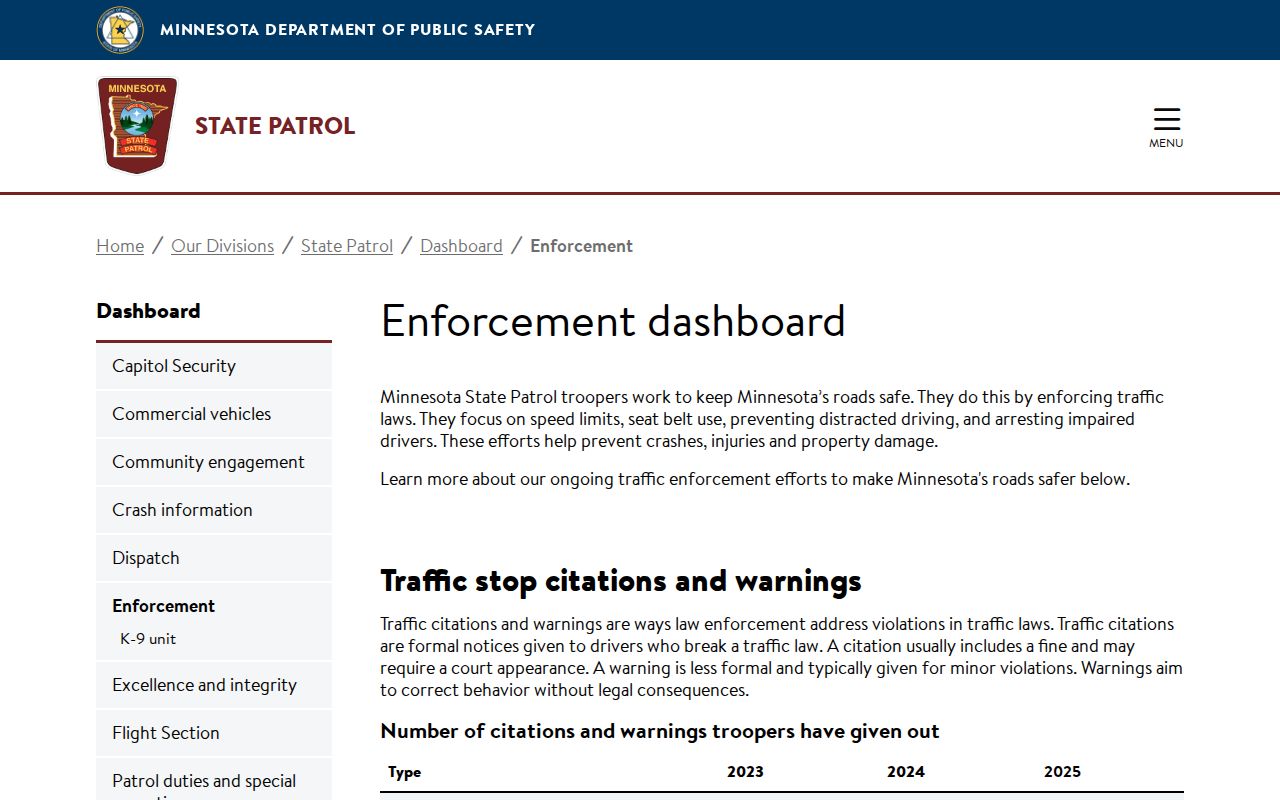
A state dashboard shows what the Minnesota State Patrol reports, but a specific booking still comes from the county jail holding that person or the arresting agency's records unit.
Private sites fill a different niche. RecentlyBooked's Minnesota section and Mugshots.com's Minnesota index both compile booking information across counties, though neither is official and neither guarantees a complete or current roster row. RecentlyBooked claims thirty days of coverage on its own page. Mugshots.com adds county-by-county navigation.
Treat both as leads, not answers. Verify any entry with the originating county before relying on it. If a copied item looks wrong or stale, each site offers a correction process worth using.
The RecentlyBooked Minnesota landing page shows its county navigation and its stated coverage window.
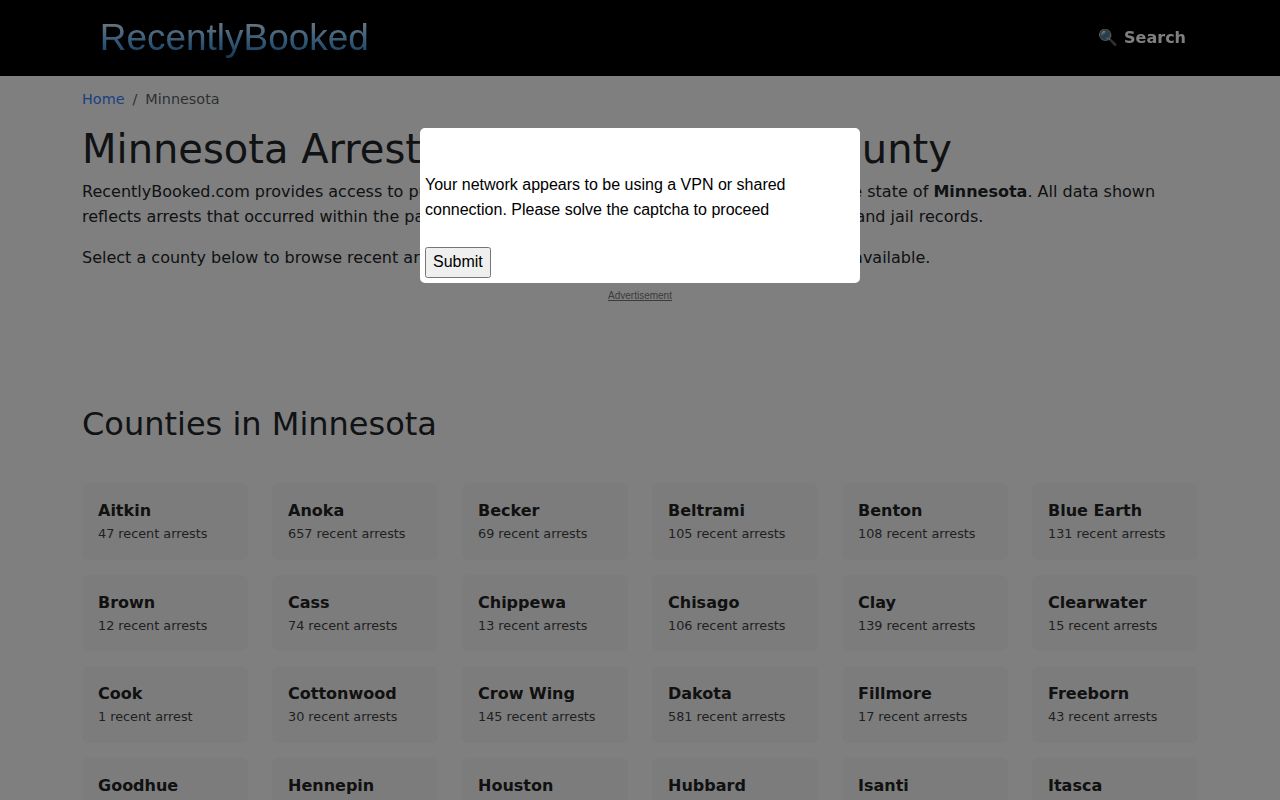
This private index works only as a lead. The official county custodian still owns the record. The Mugshots.com Minnesota page is another secondary index, arranged by county rather than run by a Minnesota agency.
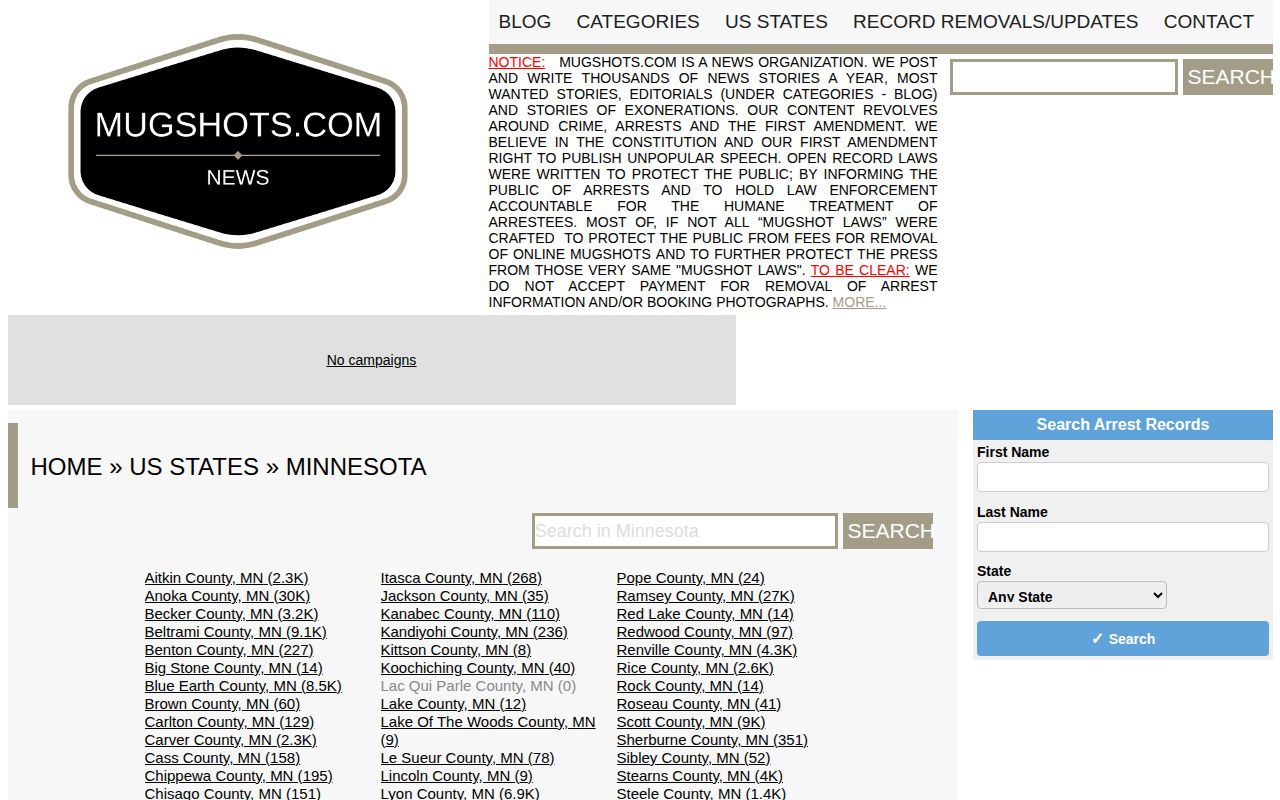
County links on that page can point you toward copied arrest material. No link there replaces a current government record or settles a case result.
Note: News stories and copied listing pages are secondary leads and may not reflect a later court result.
Arrests.org's Minnesota page is another private index. It leans on county links and secondary arrest records. Its own page warns the data can be incomplete or stale. Treat it as a lead, not proof of custody. Busted Newspaper and Mugshots.zone list no Minnesota URL here. Don't guess a state-specific address for either. Newsrooms add another layer. Star Tribune, KARE 11, WCCO, FOX 9, KSTP, Pioneer Press, and MPR News all cover Minnesota. Each picks which arrest events to report. Their stories bring context. But no outlet tracks every booking or keeps one complete arrest archive.
What a Minnesota Booking Record Contains
Minnesota's Government Data Practices Act makes many adult arrest details public. Minn. Stat. § 13.82 sets the classifications and exceptions. Public arrest data can cover the time, date, and place of an arrest. It also covers the legal basis, the agency and people involved, and the place of custody. Transfers and releases count too. So do an adult's name, age, sex, and last known address. An incident number and certain recordings may also fall under the statute. County systems vary. One county's record may hold extra fields, fewer public fields, or redactions, and the Revisor's Minn. Stat. § 13.82 page spells out the booking-photo and law-enforcement data rules that shape what an agency may release.
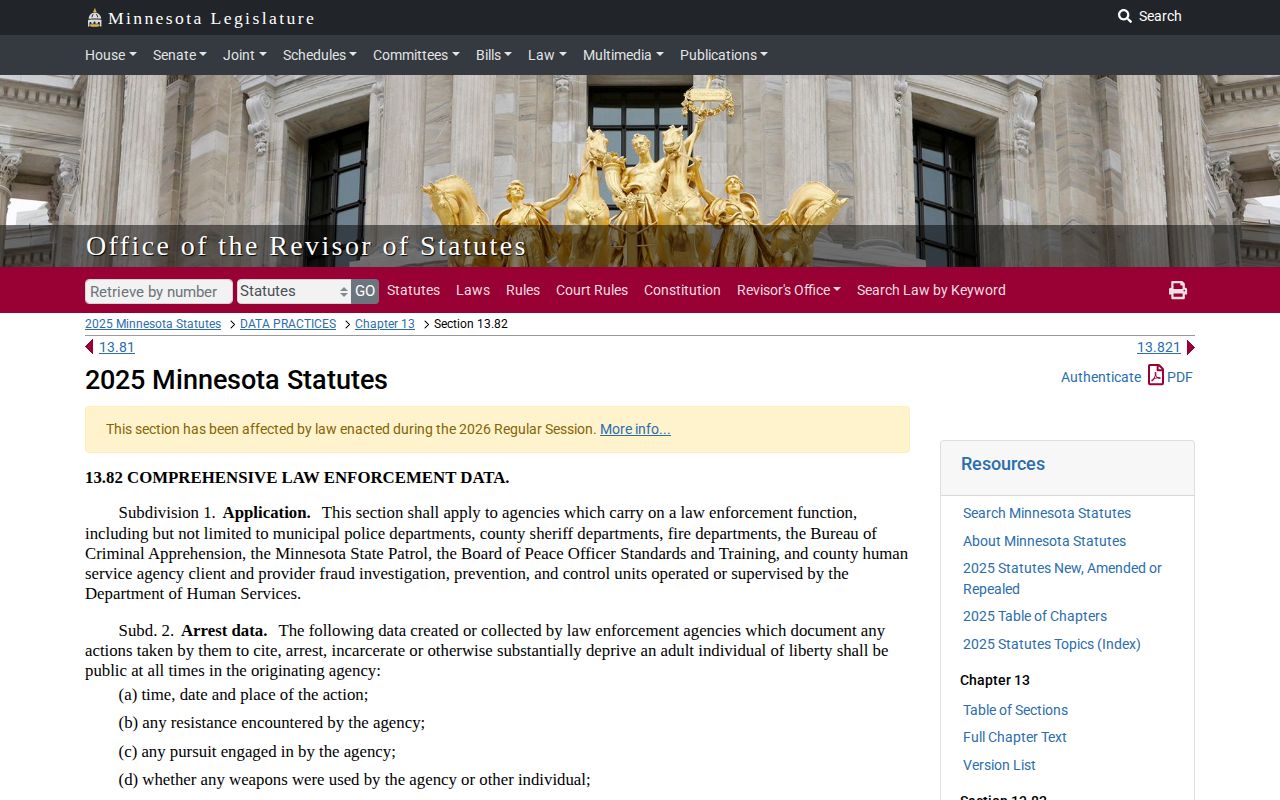
Read the statute beside the agency's own explanation. A public classification does not put every field on every web roster.
| Record layer | May contain | Best source |
|---|---|---|
| County booking or custody | Booking date, custody status, facility, listed charge, bond or release details when shown | The jail or sheriff that holds or booked the person |
| Law-enforcement arrest file | Arrest time and place, legal basis, agency, incident number, adult arrest data, some recordings | The agency that created or maintains the file |
| Court case record | Filed charge, hearings, orders, plea, judgment, or disposition when public | Minnesota Court Records Online or the court administrator |
| DOC custody profile | Adult custody and supervision details under DOC jurisdiction | Minnesota DOC Public Viewer |
Here, booking means jail intake after an arrest. A bond entry, when shown, records an amount or release condition the court set. A disposition is the result recorded in a court case. Each field marks a different stage, and entries shift as a case moves forward.
These records answer separate questions. A booking row shows intake or present custody. The police file holds an investigation. The court file tracks the prosecution, while a corrections profile covers a sentence or supervision. An initial charge can change, be dismissed, or end differently from the first booking description. Check the Register of Actions and court documents for the final result.
Note: No image on a county feed does not establish that the agency lacks a booking photo.
Minnesota Arrest Photos and County Feeds
Minn. Stat. § 13.82, subdivision 26 makes a booking photograph public data. Law enforcement can withhold one briefly when release would jeopardize an active investigation. That rule covers agency data. It does not force any sheriff to post photos online. A public record and a public website are different things. Some county systems show a picture or an image link. Others stick to text. County PDFs from Washington, Carver, Aitkin, and other agencies carry fields with no photo column.
Practice varies by system. Wright County's Jail Media Report and census include photo fields. Live jail interfaces in Crow Wing, Chippewa, Chisago, Kandiyohi, and Yellow Medicine may display a photo. Stearns is less dependable. Its images do not load reliably. A blank photo area can simply mean that view published no image. It does not mean the agency never took or kept one. Ask the custodian for a specific image when you need a lawful copy. Expect the agency to weigh its exceptions.
Third-party pages copy images from public sources and keep their own cached copies. RecentlyBooked and Mugshots.com run secondary Minnesota indexes. Keep a source link, date, and case context with any arrest photo you discuss. For the statute, sealing paths, and correction options, see Minnesota Arrest Record Laws.
How to Request a Minnesota Booking Record
Ask the office that holds the record. Minnesota Stat. § 13.03 lets you inspect public government data free, at reasonable times and places. Copies may carry a fee. That fee is capped by statute and actual cost. The agency will not build a new statewide report out of data it never kept. Separating public from nonpublic data costs nothing. A narrow, specific request moves faster than a broad demand for everything tied to a name.
- Choose the record: booking sheet, arrest report, incident number, booking photograph, or a court filing.
- Give the likely custodian a date range, county or location, agency, name if known, and case or booking number if available.
- Ask which office is the responsible authority and whether the record is public, partly restricted, or still under review.
- Request an inspection first if a free review will answer the question; request copies only for the pages or files needed.
- Keep the response, fee estimate, and any denial reason so a follow-up can identify the exact record and legal basis.
Start with the sheriff or jail in the booking county. A booking sheet and a jail photograph live there. Incident reports and body-worn camera files go to the agency that made the arrest. That could be a city police department, a county sheriff, or the State Patrol. State Patrol funnels most requests through its Records Request Center. Body-camera data follows its own separate process. Court papers come from MCRO or the court administrator. What if an agency withholds something? Ask it to name the data classification or statute that applies. Active investigations, juvenile matters, and victim-identity protections can all limit what gets released. Retention matters too. A county roster tracks current custody, not history. State and local retention schedules set how long each record type is kept. No single online archive holds every county booking photo in Minnesota. The Minnesota State Archives Government Records Services page explains retention schedules and historical records routes, and the agency that created a recent booking file remains the best first contact.
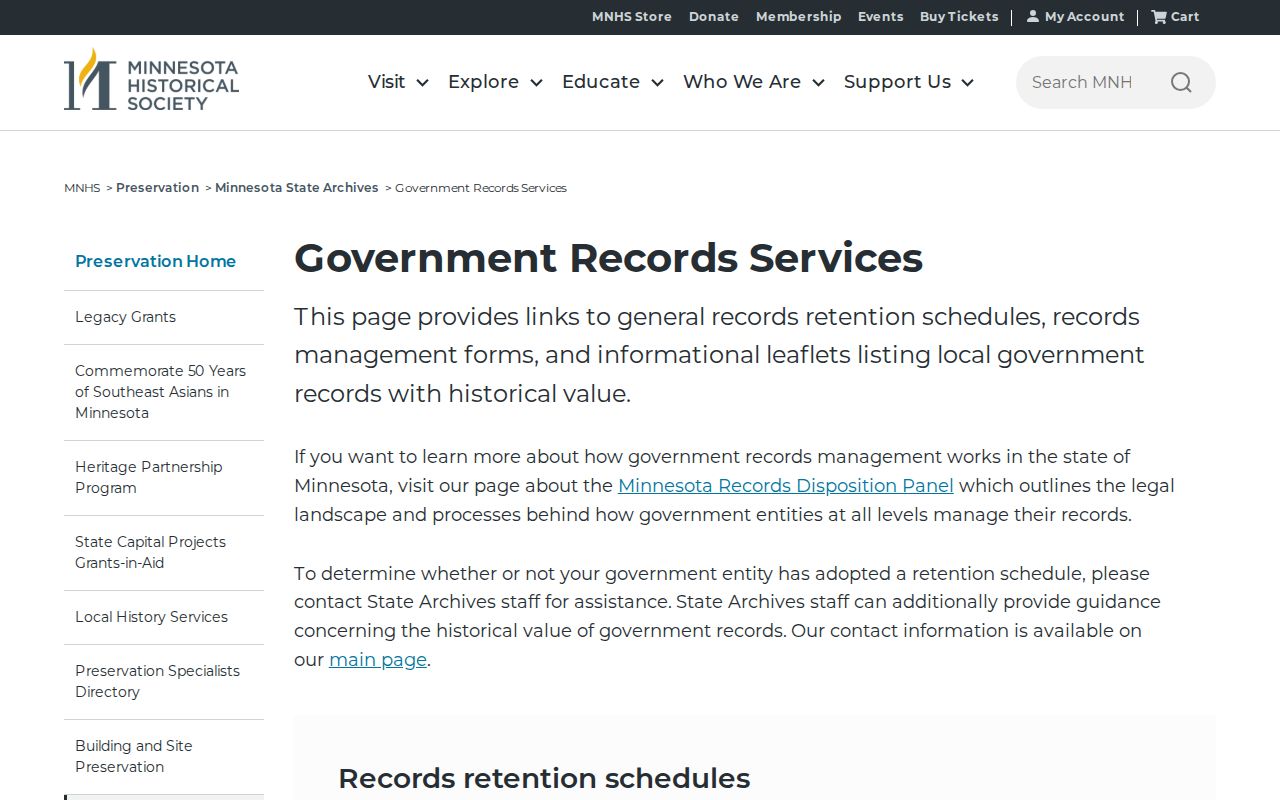
A retention schedule can point to the right custodian. It cannot prove that every old roster or photograph was kept. Older state-prison material sits with the Minnesota Historical Society. Its Corrections Department inventory covers roughly 1914 through 1977. That is a historical collection, not a county arrest-photo database. MNHS also runs a separate request service for certain State Correctional Institution prison records. Index and case-file fees, turnaround times, and a 75-year access restriction apply. Check the current service page before requesting anything. This archival route concerns a person and institution in the collection. It does not cover every arrest made in Minnesota.
Minnesota Warrants and Active Wanted Lists
A warrant is a court order for a defined law-enforcement action. An arrest warrant can authorize taking a named person into custody. Minnesota has no statewide warrant search by name. Each county enters, serves, recalls, or restricts warrants on its own timeline. A public page may hide a sealed or protected index. Ask the issuing court or the holding sheriff about a specific warrant. A lawyer can interpret a notice you received. An empty search proves nothing. The Minnesota Department of Corrections keeps an Active Fugitives page. It lists people under community supervision accused of violating release terms and evading authorities. That makes it a supervision absconder list. It is not a catalog of recent arrests. DOC posts a 24-hour tip line at 651-603-0026. Never approach, follow, or investigate anyone on the list. Send tips to DOC or the listed law-enforcement contact, and the Minnesota DOC Wanted Fugitives page explains the list's scope and its safe reporting route.
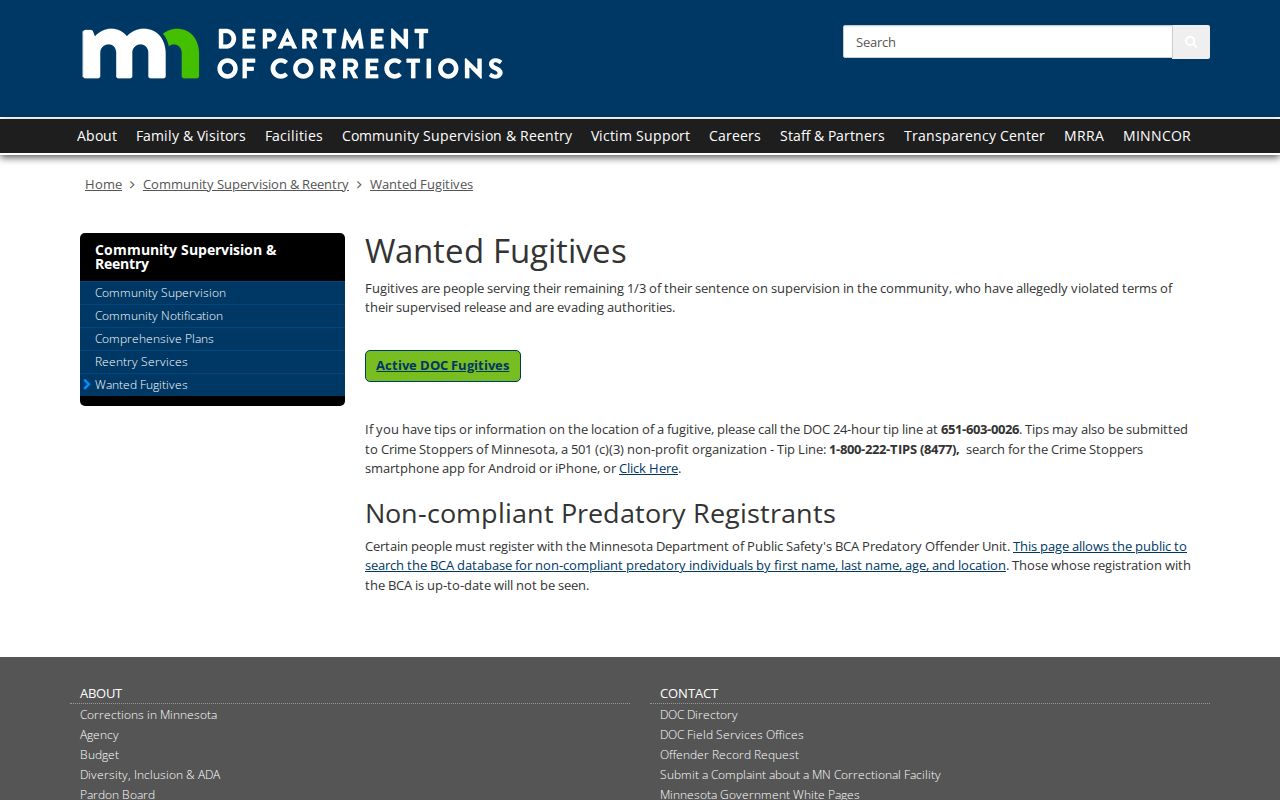
The DOC list targets supervision violations. It is neither an arrest roster nor a county warrant index. The BCA keeps a public non-compliant Predatory Offender Registry. That registry is not a general wanted list. It is also not proof of a new arrest. The FBI Minneapolis Wanted and Missing Persons page covers cases tied to that field office. Some entries simply seek information from the public. The U.S. Marshals District of Minnesota page offers district and task-force contacts rather than a profiled-fugitive list. These pages change over time. Read each agency's current description before drawing conclusions. Report tips through the named agency instead of approaching anyone yourself. For county warrant status, go to the responsible sheriff or court. Ask what information is public. Minnesota law treats warrant indices as confidential until the person is in custody, the warrant is served, or the person has appeared in court, unless disclosure serves a public purpose under the statute. A docket entry, a wanted notice, and an active warrant are different records, and an agency can confirm which one is current and which office explains the next step.
After an Arrest: Courts, DOC, and Federal Custody
Once an arrest becomes a court case, the record moves to a different system. Minnesota Court Records Online, or MCRO, searches public district court cases in several ways. Name, case number, citation, attorney, hearing, judgment, county, and criminal category all work. Each one serves as a search term. Booking records are not there. Some pending criminal cases cannot be pulled by defendant name alone. Those need a case number. Juvenile, sealed, and protected matters may not appear online at all. Names also repeat, so a match can point to the wrong person. Open the Register of Actions and the filed documents. That shows what the case actually says. The Minnesota Court Records Online search page opens the Judicial Branch portal. Its public case-search route starts there.
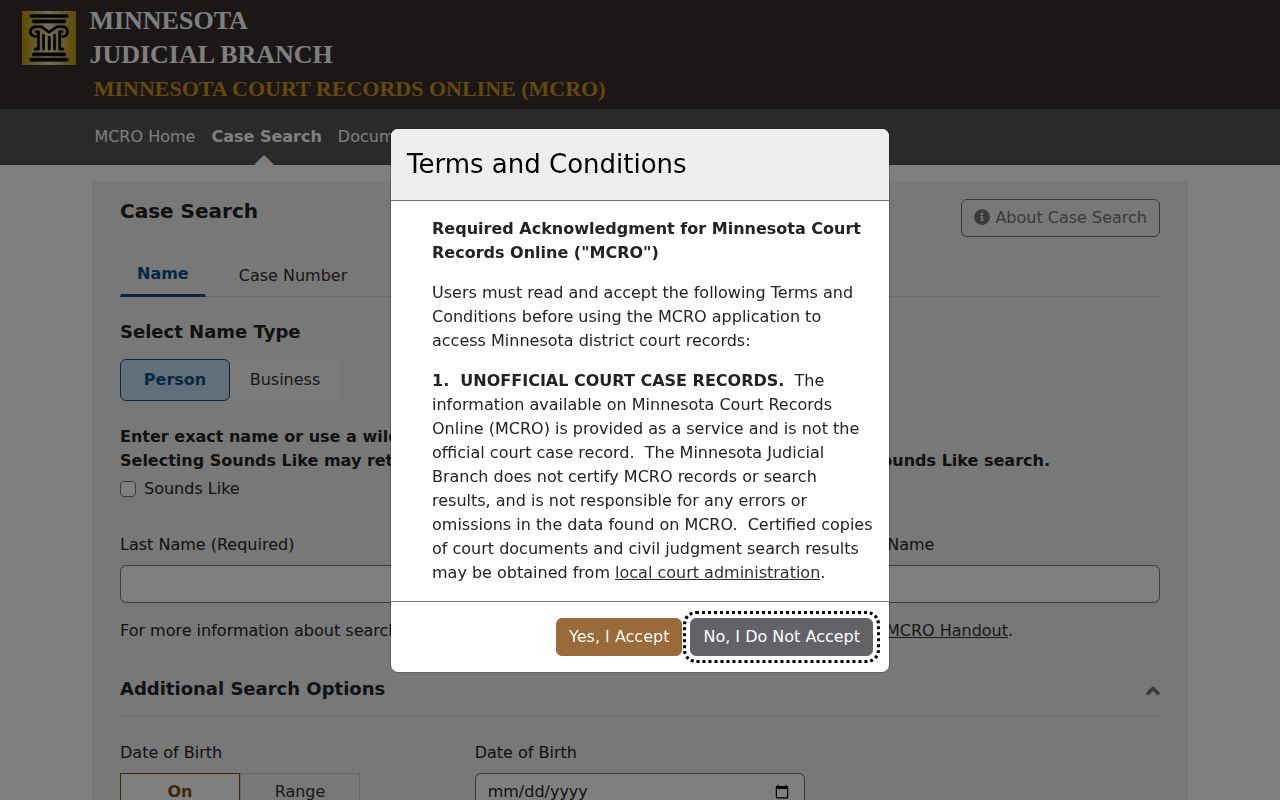
MCRO can help trace a public court case after an arrest, but access limits and delayed filings mean that no search result is not a finding about what happened.
The Minnesota Bureau of Criminal Apprehension (BCA) public criminal-history service is conviction-oriented and does not show arrest data, juvenile data, federal data, or some older and nonpublic information. It can help with a public disposition trail, but it cannot replace a jail, arresting agency, court file, or records request. If a person is serving a state sentence or remains under DOC jurisdiction, the Minnesota DOC Public Viewer covers adults in that system. Its profile may include custody or supervision data, and a photo is not promised on every profile.
The Minnesota DOC Public Viewer is the official search for adults under DOC jurisdiction, not for fresh county jail bookings.
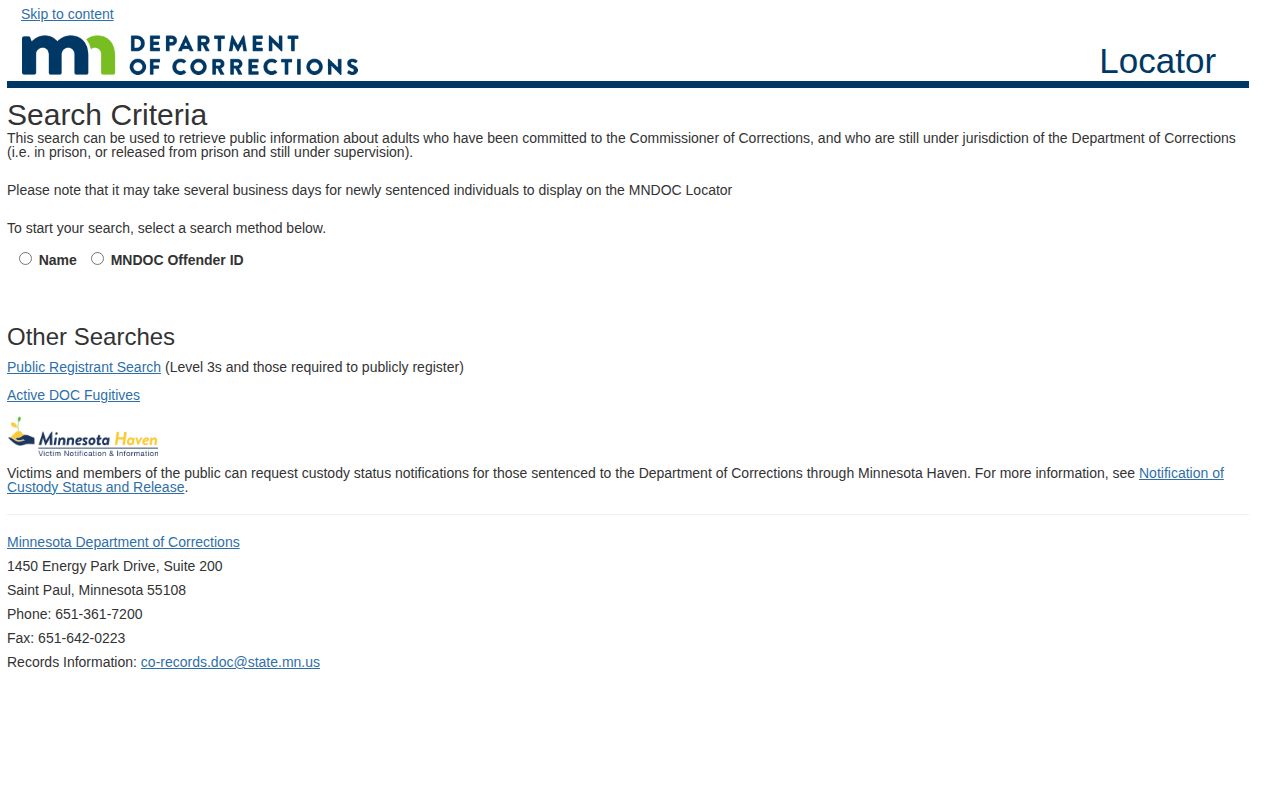
Use the county jail or VINE for local detention and the DOC viewer only after custody moves into the state corrections system.
For federal custody, the Federal Bureau of Prisons Inmate Locator searches people in federal custody and does not supply public booking photographs. ICE has a separate Online Detainee Locator System for immigration detention. Neither system is a Minnesota county arrest feed. Transfers, intake timing, and system rules can affect the result; for a recent local booking, return to the county source or contact the agency that made the arrest.
The Bureau of Prisons Inmate Locator is the federal custody route and states the scope of its search.
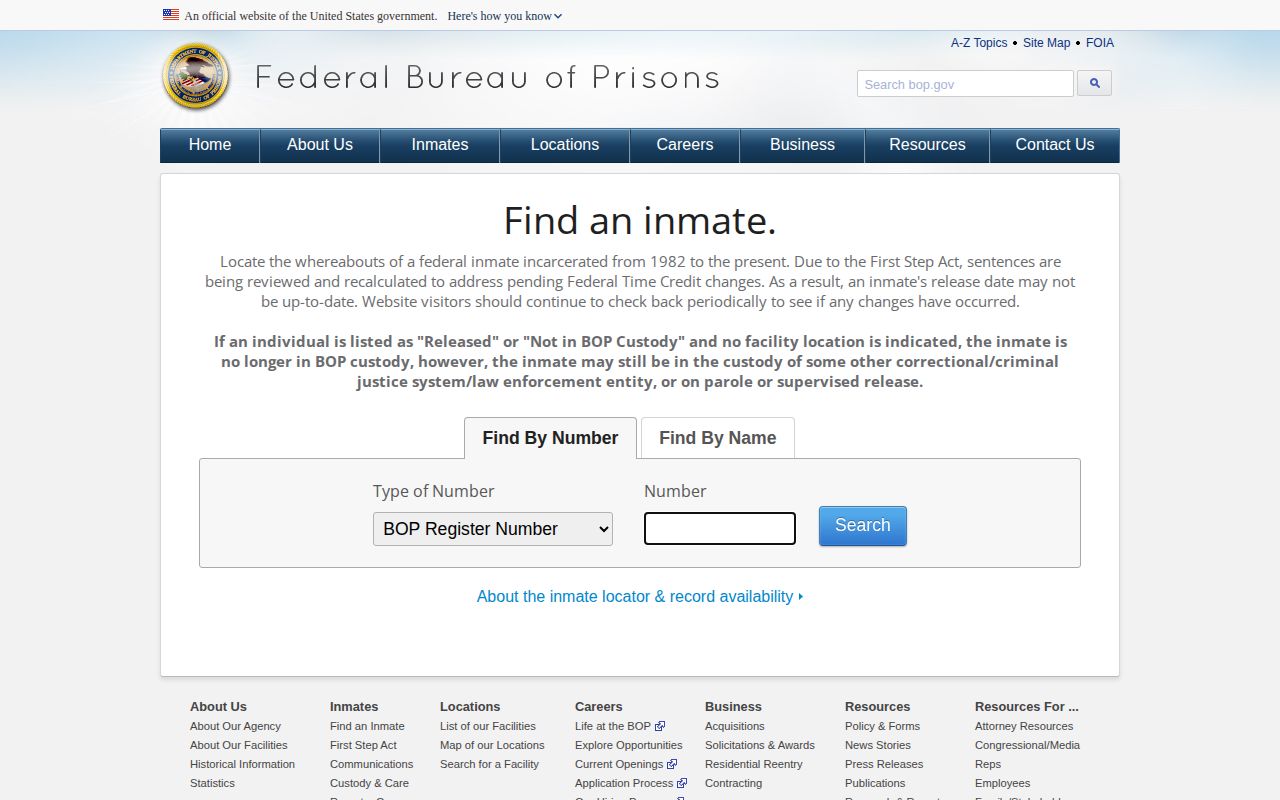
Federal results cover federal custody only. They cannot confirm a county booking or settle the outcome of a Minnesota court case.