
Minnesota Multi-Day Arrest Logs
Minnesota arrest history lives in pieces. No statewide blotter ties it together. One county posts weekly booking data; another relies on a rolling media report, a jail-history search, or daily files. Some sheriffs add incident summaries too. Others publish nothing beyond the live custody list. The right source depends on the event date, the county, and the record you want. A wider window helps. It can catch weekend bookings or reports posted after a period closes. Even so, each log covers only the span its agency chose, and someone cited, released, moved, or booked late may not appear.
What a Minnesota Arrest Entry Shows
Fields vary by county and report type. Washington County booking reports and Wright County weekly data show the range one arrest log can hold. Incident summaries can drop booking fields. A blank space never proves the agency lacks that data.
| Field or source | What it may show | Scope and limit |
|---|---|---|
| Booking number and name | Links a person to a jail intake entry. | Washington includes both fields. |
| Arrest and booking times | Shows when the arrest occurred and when jail intake was recorded. | Washington separates these dates and times; the newest report header sets the window. |
| Arresting agency, officer, and place | Shows the agency and event location. | Can help route a request; some summaries omit these fields. |
| Charge, booking type, and level | States the listed charge or intake category. | Wright's weekly data includes original charges and level; these are not a court finding. |
| Release, holds, or transfer | May show release, a hold, or a custody move. | Only shown where reported; not a live custody check. |
| Photo | Some jail systems display an image field. | Sampled Wright and Washington reports did not show one. |
Note: Compare the report title and date range before reading a booking date as the day the underlying arrest occurred.
Where Minnesota Blotters Appear
Official county sources come first, but “log” and “blotter” mean different things across the state. Check each source label before treating an entry as an arrest or booking.
| Official source | Window and record type | What to keep in mind |
|---|---|---|
| Washington County Daily Jail Booking Report | Seven rotating weekday PDFs cover Sunday through Saturday in 7 a.m. to 7 a.m. periods. | Use the report header for its date range. Static files rotate, with no stated permanent archive. |
| Wright County Weekly Booking Data | Several days of bookings, with name, DOB, address, dates, original charges, and level. | No photo column in the reviewed file. |
| Carver County Blotters | Multi-day incident snapshots. | A welfare check or traffic event may appear without an arrest, so it is not a full booking register. |
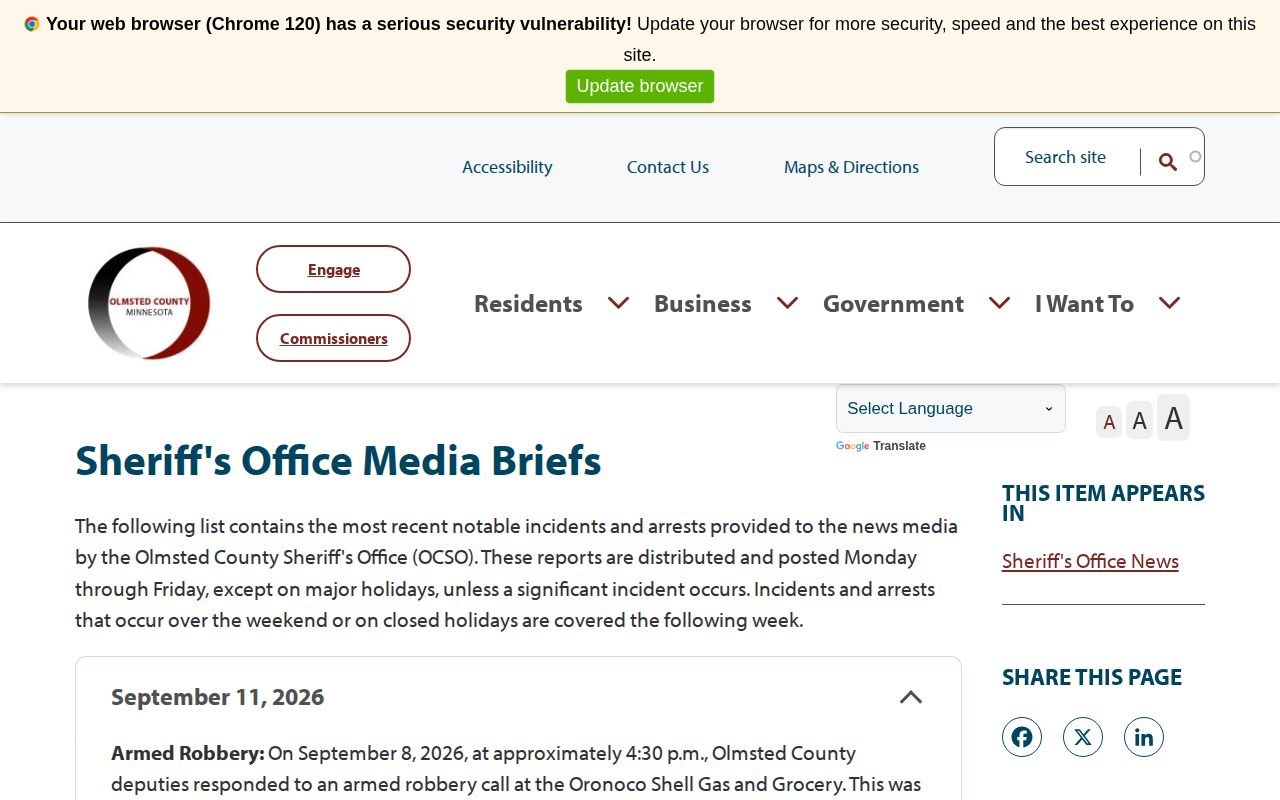
| Olmsted County Sheriff’s Office Media Briefs | Selected notable events, generally posted on weekdays. | Weekend and holiday events may appear the next week; the observed archive reached the prior year, with no permanent depth stated. |
| Yellow Medicine County Media Report | An observed rolling span of about 10 to 11 days. | It lists event types beyond arrests and showed no photos in the reviewed report. |
| Stearns County Past roster | A stated seven-year jail-history search. | It requires a last name and is a county jail archive, not a statewide arrest log. |
The Olmsted County media briefs show how one sheriff's office frames selected events on a weekday cycle.
Even a report labeled “arrests” can be selective. Check its date and scope, then ask the agency for the fuller record.
Read a Minnesota Police Blotter
Start with the likely county. A broad name search can mislead. A person can be arrested in one county and booked in another, so these steps keep the date window, the event, and the custody facts separate.
- Set the date range. Read the header and dates covered. A weekly PDF may post after its last day.
- Check the record type. A booking report tracks jail intake; a roster lists people held now; an incident blotter may include calls without an arrest.
- Match event details. Compare name, booking number, arrest date, place, or agency. A name alone can point to someone else.
- Read charges as claims. An original charge or level describes the booking record. A court filing can change it.
- Ask about gaps. If a log is old or silent, ask the sheriff or arresting agency for the record it holds. A missing web entry proves little.
Older data takes a formal request. The request falls under the Minnesota Government Data Practices Act, section 13.03. Give the agency a name, event date, and county. Add the incident or booking number and the exact record you want. Ask to inspect or copy an existing record, not to build a new list. Public inspection is generally free. Copies may cost the agency's actual expense within statutory limits.
Note: Ask for the booking report, incident report, or release entry by name; “all records” can make a narrow search harder to resolve.
Minnesota State Patrol Incident Logs
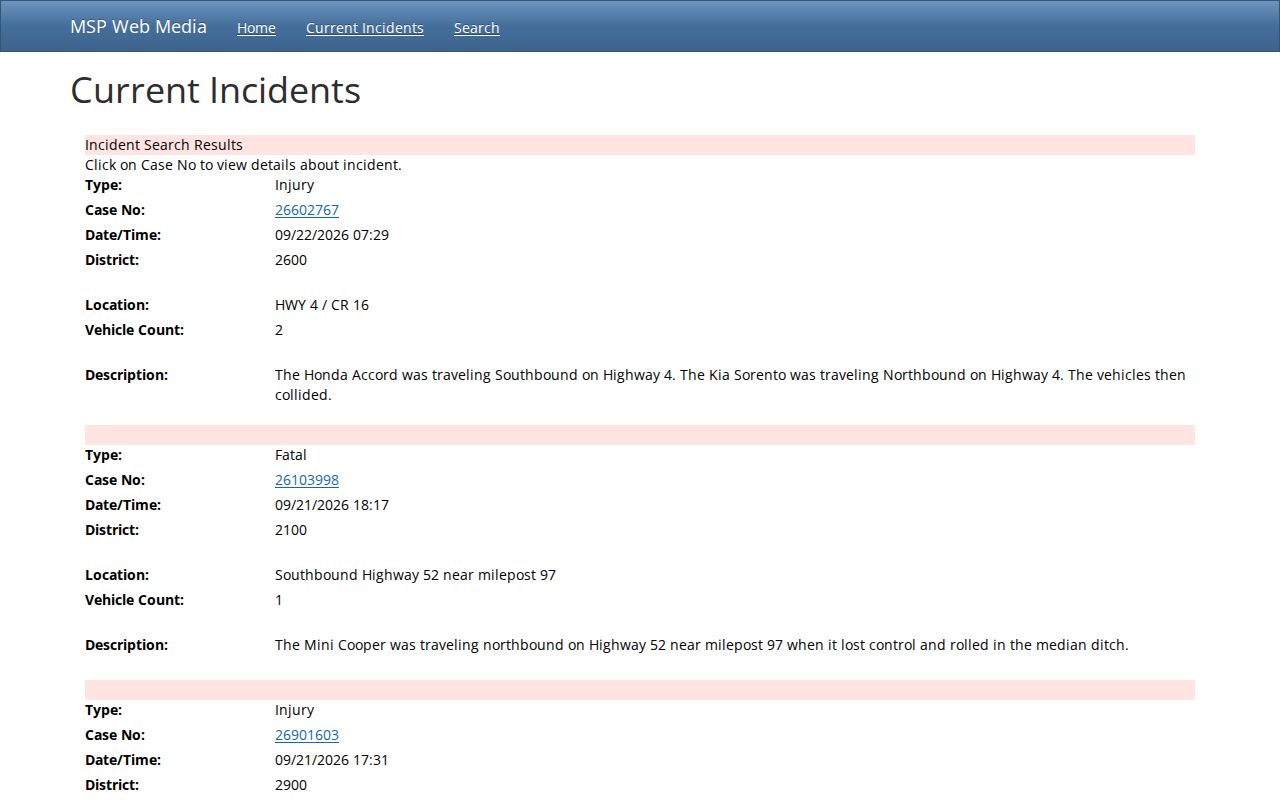
The State Patrol posts no daily arrest roster. Its current incident page and Crash Updates search cover selected serious or fatal crashes where the Patrol is the primary agency. Search by case number or last name. High volume can delay entries. An incident record is not a jail booking list.
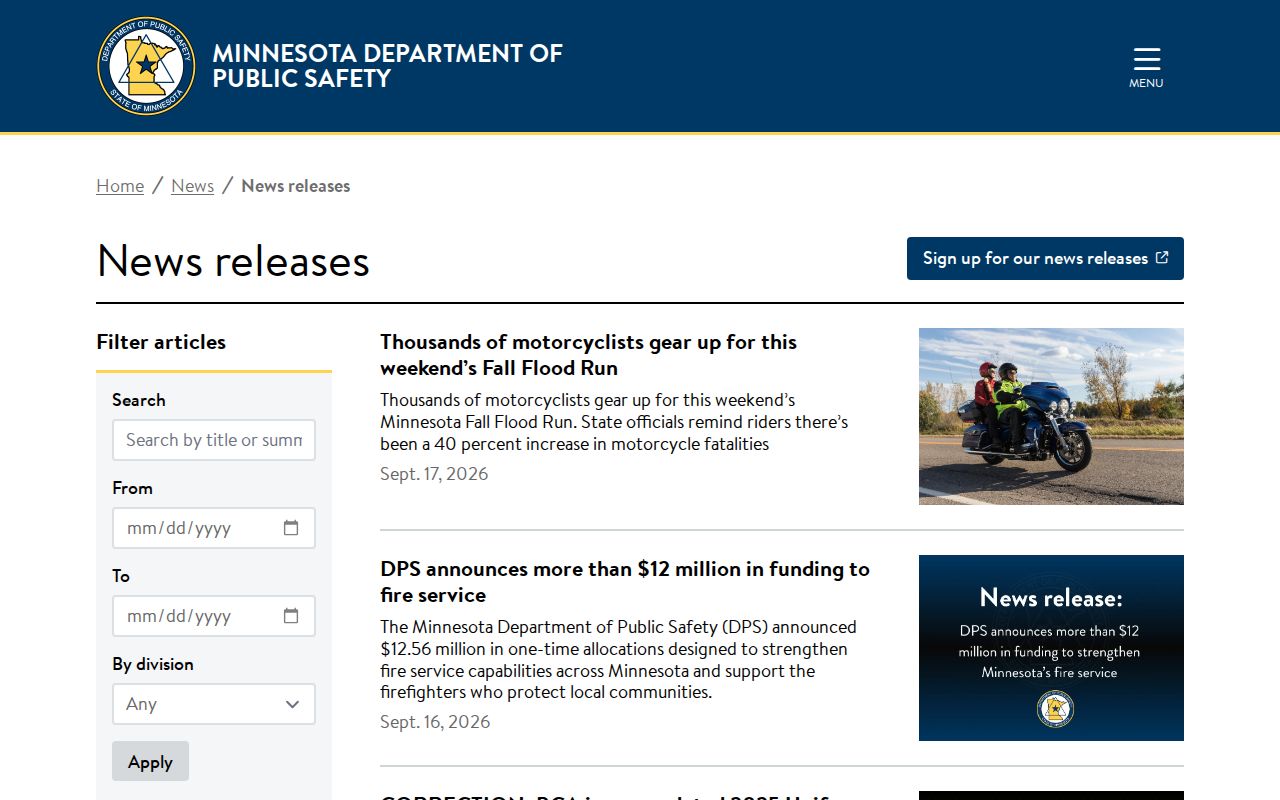
Minnesota Department of Public Safety news releases may report an impaired-driving arrest, a pursuit, a fatal crash, or an enforcement event. They are selective, not a full log. A trooper's arrest often means booking nearby. The county jail holds that booking entry, while the Patrol keeps the incident or crash report.
Sometimes neither view fits. Ask the arresting agency or booking county for its own record, since incident reports and current custody stay separate.
Regional News Blotters in Minnesota
News reports fill gaps when official arrest logs run brief or roll off. They are not booking records. The Star Tribune covers public-safety events statewide. Regional options include the New Ulm Journal police logs and the Brainerd Dispatch police blotter. Each outlet picks its own stories and archive span. A news item may lag, misidentify someone, or omit a release or dismissal. Newsrooms correct errors and add outcomes at their own pace. Accuracy is not assured. Confirm the arrest with the jail or agency. Then check court records. Olmsted's sheriff briefs are selective too, and the office remains custodian of any full report.
Weekend and Holiday Arrest Delays
Weekend lag varies across Minnesota. A weekly report may close after Saturday, a weekday brief may cover events late, and a rolling report runs its own cycle. Holidays can shift review. Newsrooms may wait for a reporter or court filing before publishing an arrest.
For a same-day arrest, use the county's newest-booking source. Check its stated window. The statewide Arrests Last 24 Hours route compares same-day views. A fresh booking may miss a weekly report, and an older log won't show who is in custody now.
Minnesota Arrest Archives and Retention
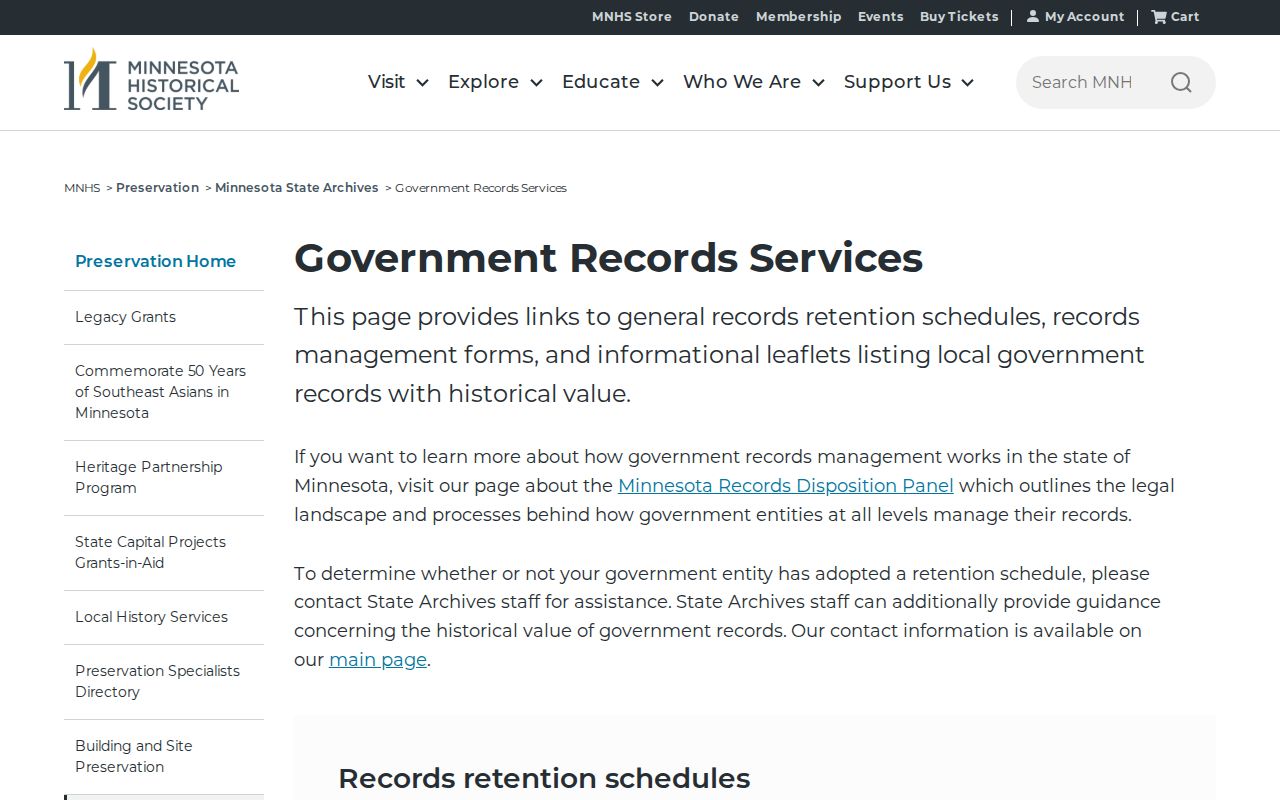
Published history depends on the custodian. Stearns County states a seven-year Past roster, while Yellow Medicine's report held roughly 10 to 11 days. Washington County's daily PDFs can rotate. No permanent archive is stated. These are product windows, not one Minnesota retention rule. The Minnesota Historical Society Government Records Services page links to local and state schedules, forms, and historical-value guidance, and it points people to State Archives staff when a schedule or a record's historical value is unclear.
No statewide archive in Minnesota gathers every booking photo or county log into one place. Records live where they were made. A jail roster can drop a name overnight. The arrest report or court file can stay open for years. Whether anything survives depends on the retention schedule. The record type matters too. Any hold on the person counts, and so does the file's historical value. A missing page means nothing by itself. Ask the agency which schedule applies. Ask whether older material moved to an archive.
Note: Keep the source name and the date checked; a later reader needs to know whether an old entry came from a live feed or an archive.
When Minnesota Arrest Searches Miss
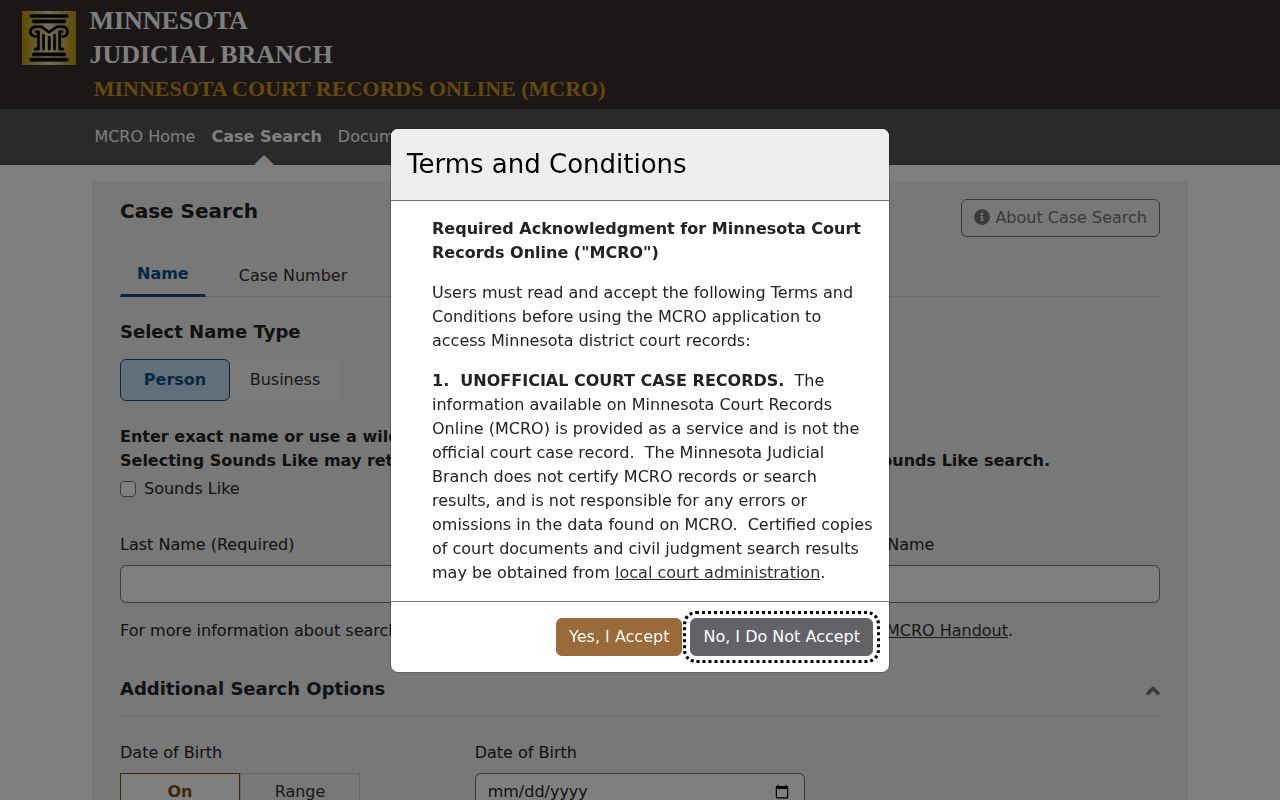
A blank search in one portal settles nothing. Minnesota Court Records Online can hide pending criminal cases from a name search. That holds unless you already have a case number. The terms also warn that a name match can be wrong. MCRO is a court source, not a jail roster. An arrest may never touch it. Its search form offers a last-name field plus a separate case-number option. The Bureau of Criminal Apprehension public history search covers convictions, not arrest data. It skips juvenile and federal records too, along with some older or nonpublic files. A county arrest can sit entirely outside it. Check the record type before treating a blank result as an answer.
See the Minnesota recent arrests overview for county routes and statewide roster coverage.